
Published
Tuesday, May 12 2026
Last Updated
An interview with An interview with Jennifer Patterson, RMT, faculty, Massage Therapy.
Massage is often associated with relaxation, but massage therapy plays a broader role in wellness, pain management, injury recovery and self-care. In Canada, massage therapy is a regulated profession that uses therapeutic techniques to support physical comfort, mobility and overall well-being. Whether someone is looking to reduce muscle tension, manage chronic pain or support mental wellness, massage therapy offers a range of personalized approaches.
What is massage therapy?
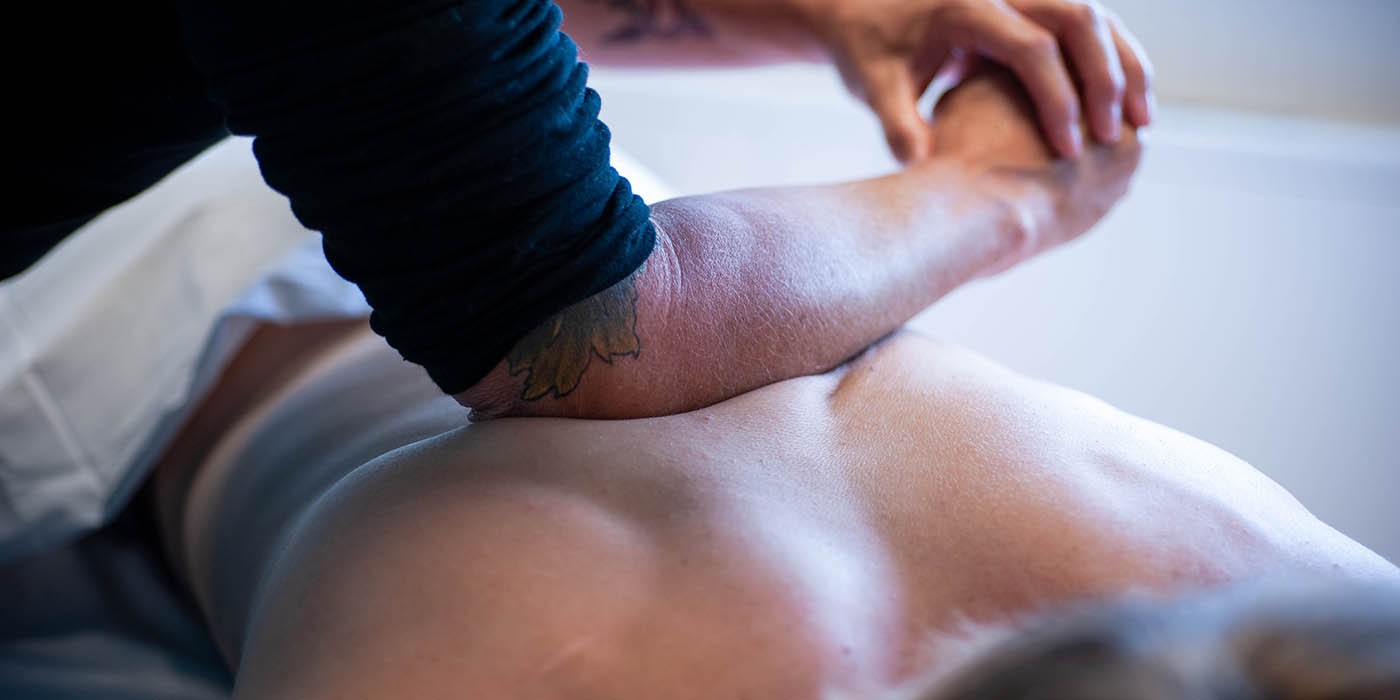
Massage therapy is more than a spa treatment. It involves hands-on techniques that target muscles, fascia, tendons and other soft tissues to support different physical and wellness goals. Massage therapy can range from gentle approaches focused on circulation to deeper techniques designed to address chronic tension or mobility concerns.
“There’s actually such a wide variety of massage therapy. You can go from the most gentle type of massage, like lymphatic drainage all the way to a deep tissue massage.”
Massage therapy may support:
- Relaxation
- Stress management
- Pain relief
- Injury recovery
- Mobility
- Chronic condition support
Benefits of massage therapy
The benefits of massage therapy vary depending on the individual. For some, it is part of a regular wellness routine. For others, it supports pain management, rehabilitation or mental reset.
Massage therapy may help physically:
- Reduce muscle tension
- Improve mobility
- Support circulation
- Encourage flexibility
- Assist with recovery from physical activity or repetitive strain
Message therapy may help mentally and emotionally
Massage therapy can also support stress reduction by creating intentional time for rest and self-focus.
“It’s that moment of putting your phone down, turning off a screen, and just focusing on yourself.”
For many people, massage therapy becomes part of a broader wellness routine that supports calm and consistency.
Types of massage therapy
Massage therapy is not one single approach. Different techniques are used depending on the client’s condition, goals and preferences.
Lymphatic drainage A gentle technique often used for swelling or fluid retention.
Deep tissue massage Targets deeper muscle layers and fascia to address long-term tension.
“It’s great for when you want to work out some of the long-term things that have been accumulating in the body.”
Myofascial techniques Focus on connective tissue and may support mobility, posture and chronic pain concerns.
Cupping therapy Uses suction rather than pressure to lift tissue.
“Instead of pressing into the tissue, like in a typical massage, cupping actually lifts the tissue using suction.”
Instrument-assisted soft tissue manipulation Uses tools to support deeper tissue work, scar tissue management and muscle release.
Massage therapy for pain management
Massage therapy can be an important part of pain management for some individuals. It may support people managing, fibromyalgia, sciatica, tendonitis, general muscular pain and/or repetitive strain.
Massage therapy is increasingly personalized.
“It used to be, ‘You have this, so we’ll do A-B-C-D,’. Now it’s about working with the client, seeing what they need on that day, and adapting the treatment accordingly.”
For those living with chronic conditions, flexibility matters.
“Even if it’s just for a day, if it helps them feel better or move better, that’s still meaningful.”
How often should you get massage therapy? Massage therapy frequency depends on the individual. There is no single standard. Some people schedule monthly sessions as part of a wellness routine, while others attend more frequently during injury recovery.
“A lot of people will go toward that once-a-month sort of check-in.”
For more acute concerns:
“We would always say go a little bit more in the beginning.”
Long-term schedules should feel realistic.
“The best schedule is one that’s realistic and sustainable.”
Massage therapy and complementary care
Massage therapy can work alongside other forms of care. Massage, physiotherapy and chiropractic treatment may overlap, but each serves a different purpose.
“These roles can absolutely complement each other. There’s a lot of overlap, but the difference comes down to how each profession treats the issue.”
Communication between providers helps ensure care is coordinated and effective.
Finding the right massage therapist
Massage therapy is personal. Technique matters, but comfort, communication and therapeutic fit also shape the experience.
“The same therapist isn’t as important as the right therapist. You want someone who understands your body, listens to you, and helps create a space where you can heal.”
More than relaxation
Massage therapy can be many things. For some, it is stress relief. For others, it supports pain management, injury recovery or long-term wellness. Understanding what massage therapy is and how it can be personalized helps people make more informed decisions about their health. Massage therapy is flexible and for many people, that flexibility is part of what makes it valuable.
This article was developed by Swapthika Nallavelli, Marketing Management student. Brought to you in collaboration with Village Creative, an experiential learning opportunity at Fanshawe College.
For any media inquiries, please reach out to mediainquiries@fanshawec.ca
Recent News
-
October 2, 2026
The Royal Canadian Air Force partners with Fanshawe College to deliver training
Read Full ReleaseThe Royal Canadian Air Force (RCAF) has partnered with Fanshawe College to deliver aviation... -
September 30, 2026
Part-Time Faculty named OHS Educator of the Year
Read StoryDel Garcia, a part-time instructor in Fanshawe’s Occupational Health and Safety (OHS) program, has... -
September 30, 2026
Live Chic is now The Fashion Lab
Read StoryNew term, new season, new name! The Fashion Marketing and Management students welcome you to the The...
Recent News
-
May 8, 2025
Construction Delays
Read StoryDue to ongoing construction in the area, there may be delays in reaching our clinic. We kindly ask... -
April 15, 2025
New Spring Schedule
Read StoryWe’re excited to announce that the spring schedule is now available on our website as we transition... -
December 16, 2024
2025 Pricing Adjustment
Read StoryEffective January 1st, our fees will increase to $30 per treatment. We understand that this is a...