
Published
Tuesday, May 12 2026
Last Updated
An interview with William Pol, MPA, RPP, MCIP, Honours Bachelor of Environmental Design and Planning
London, Ontario is growing. As one of the fastest growing cities in Canada, the way people move through the city is changing. New developments, expanding campuses and shifting job centres are putting pressure on roads, transit and infrastructure. To respond, the City has developed a long-term strategy: the Mobility Master Plan.
Why London needs a mobility master plan
London is no longer a single-centre city.
“We have the downtown, but we have other centres outside the downtown. We have to rethink how we move around the city.”
As growth spreads across the city, transportation systems need to connect more destinations efficiently. The Mobility Master Plan brings together: roads,
London transit services, cycling infrastructure and pedestrian networks into one coordinated framework through 2050.
Making London transit competitive with driving
One of the biggest shifts in the plan is prioritizing transit.
“If you can make it equally efficient to travel by bus as by car, more people will take transit.”
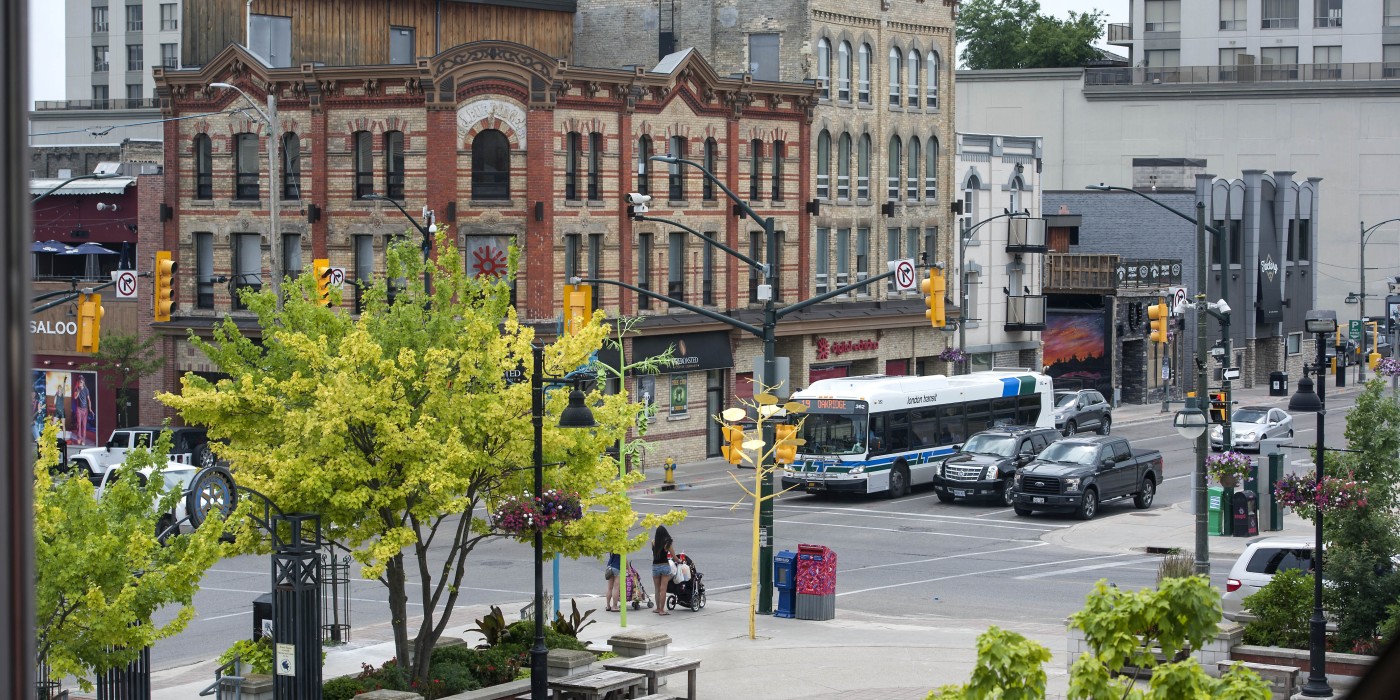
To achieve this, the city is introducing: bus priority signals, dedicated bus lanes and faster, more direct routes. These changes aim to reduce travel time and improve reliability across London transit routes.
Image

The role of the London Transit Commission
Transit improvements are supported by the London Transit Commission, which operates the city’s bus network. Design features such as limited key stops, queue jump lanes and transit signal priority help buses move more efficiently through traffic. These improvements are critical as demand for London Ontario bus routes continues to grow.
Why campus-integrated transit matters
Location matters as much as speed.
“Fanshawe College has been forward-thinking by saying we want the buses to stop right on campus, so students can step off the bus and be within steps of their classroom.”
Integrating transit directly into destinations reduces walking time and improves the overall experience. This approach makes transit feel more convenient and accessible.
The challenge of changing behaviour
Encouraging people to shift from driving to transit takes time.
“It takes years to change. The challenges of moving by car have to be so great that it is as easy to get there by public transit. That is where priority measures and promotion come in.”
This creates a “chicken and egg” situation: people won’t switch without better service and investment is harder without ridership. The Mobility Master Plan addresses this by improving service first.
Climate change, equity and city growth
The plan is not only about transportation. It connects directly to climate change, equity and economic growth.
On climate: A full bus produces significantly fewer emissions than the equivalent number of cars.
On equity: “It is about equity, making it as easy for people with less money to travel as it is for people who can afford cars.”
On the economy: “A strong, functioning transportation system improves the economic viability of the city.”
These factors show that transit planning shapes how a city functions overall.
Image
How decisions are made
Planning at this scale relies on data.
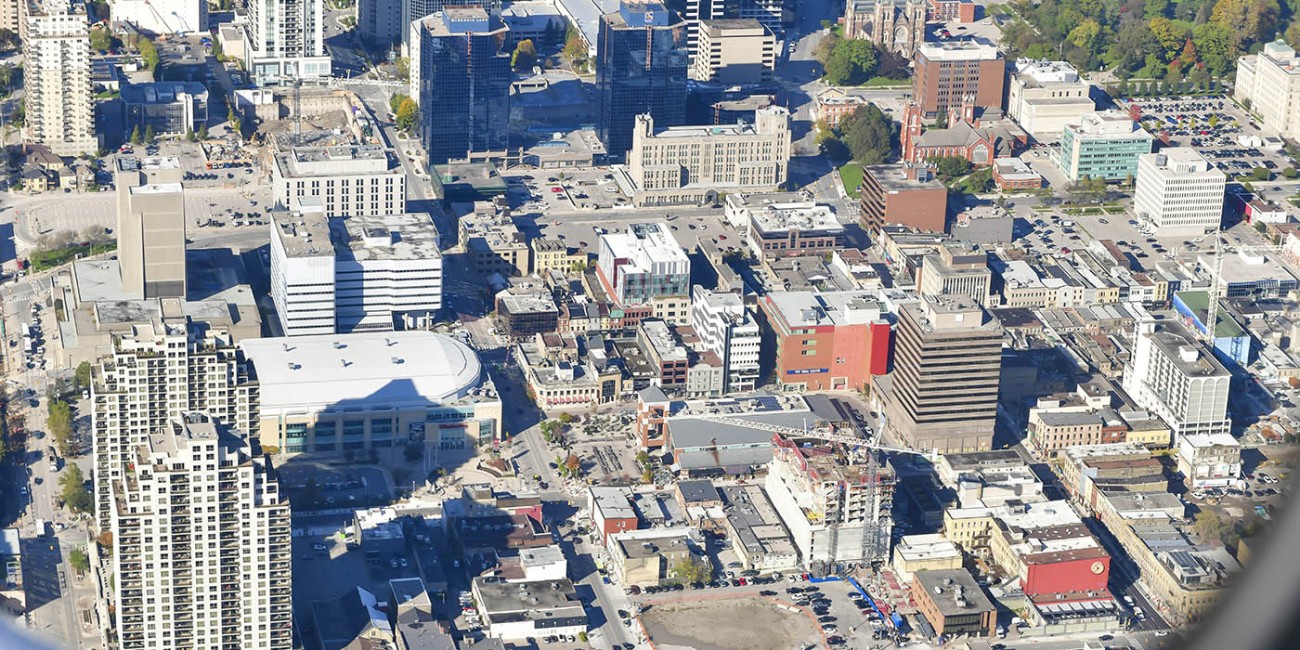
“Staff use GIS to collect and analyze mode data. They prepare the information in mapping form, bring it to the public and to council, and then council can make those big decisions.”
GIS plays a major role in urban planning by helping municipalities visualize movement patterns, infrastructure demands and long-term growth.
This process turns data into: maps, public consultations and policy decisions. It allows residents to see how changes will affect their daily travel.
What success looks like
Success is not one project. It is the gradual improvement of travel time reliability and accessibility When transit becomes as easy and predictable as driving, more people choose it. That shift is what the Mobility Master Plan is designed to achieve.
What this means for London’s future
London’s growth is not slowing down. As the city expands, transportation systems must evolve with it. The Mobility Master Plan provides a roadmap for better London transit, reduced congestion, lower emissions and more equitable access. It is not just a transportation plan. It is a strategy for how the city will grow.
This article was developed by Kaleb Boersma, Honours Bachelor of Commerce - Digital Marketing (Co-op) student. Brought to you in collaboration with Village Creative, an experiential learning opportunity at Fanshawe College.
For any media inquiries, please reach out to mediainquiries@fanshawec.ca
Recent News
-
October 21, 2026
Complex challenges require collaborative solutions
Read OpinionAs Fanshawe looks toward 2035, our leaders will share their perspectives on the issues that matter... -
October 20, 2026
Fanshawe faculty and alumni help inspire future green industry professionals
Read StoryFaculty, staff and alumni from Fanshawe’s Horticulture Technician program volunteered a Saturday in... -
October 20, 2026
Respiratory Therapy graduate helps explore AI’s potential to improve lung ultrasound diagnosis
ReadWelcome to Spotlight, a new digital content series showcasing high-impact, good news stories from...
Recent News
-
May 8, 2025
Construction Delays
Read StoryDue to ongoing construction in the area, there may be delays in reaching our clinic. We kindly ask... -
April 15, 2025
New Spring Schedule
Read StoryWe’re excited to announce that the spring schedule is now available on our website as we transition... -
December 16, 2024
2025 Pricing Adjustment
Read StoryEffective January 1st, our fees will increase to $30 per treatment. We understand that this is a...