
Published
Thursday, June 11 2026
Last Updated
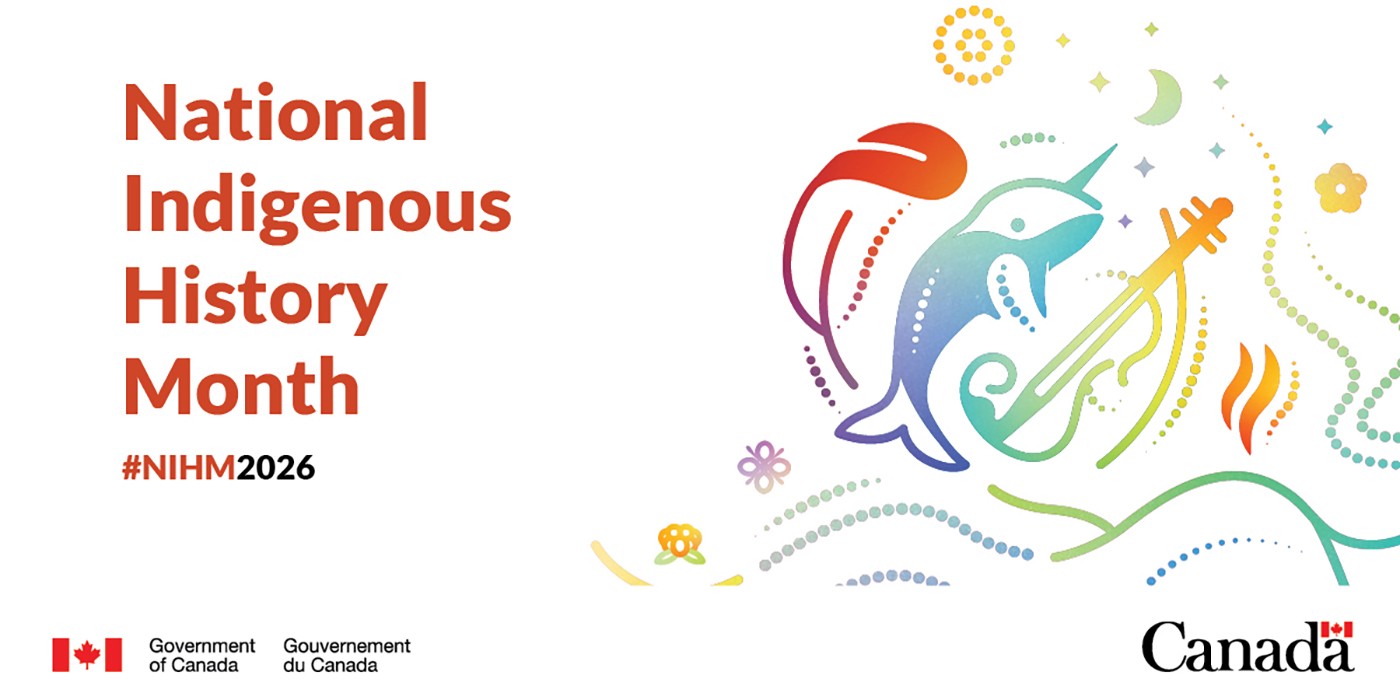
June is National Indigenous History Month in Canada, a time to honour the stories, achievements and resilience of Indigenous Peoples and whose presence continues to impact the evolving Canada.
To honour Indigenous Peoples, the Institute of Indigenous Learning is hosting and collaborating on events on campus and elsewhere in London. Everyone is welcome to join in and participate!
Ways to celebrate
Indigenous Language Bingo – June 17, Forwell Hall, Fanshawe College
The Institute of Indigenous Learning and the Fanshawe Student Union invite the Fanshawe Community to Indigenous Language Bingo in Forwell Hall, Red Zone, London Campus (1001 Fanshawe College Blvd.) on Wednesday, June 17 from 2 to 3 p.m.
Indigenous Solidarity Day – June 19, Victoria Park
The Fanshawe community is invited to join the 30th annual Indigenous Solidarity Day gathering in Victoria Park, London. The gathering, previously held on The Green in Wortley Village, features a Sunrise Ceremony as well as singers, dancers, food, vendors, community service providers and more. Bring your family and friends – everyone is welcome!
Sunrise ceremony: 6 a.m.
Main gathering: 11 a.m. to 4 p.m.
What to bring:
- Lawn chairs or picnic blankets
- Reusable food containers and utensils
- A refillable water bottle
National Indigenous Peoples Day – June 21
National Indigenous Peoples Day recognizes the rich history, heritage, resilience and diversity of First Nations, Inuit and Métis. Taking place during the longest day of the year, the summer solstice, it holds deep spiritual and cultural significance for many Indigenous Peoples, signifying a time of gathering, ceremony and celebration.
Significant historical figures
Learn about some of the significant Indigenous figures who helped shape Canada, from Tecumseh to Phyllis Webstad.
Francis Pegahmagabow (1891–1952): Anishinaabe soldier and the most decorated Indigenous veteran of WWI, later a chief and advocate for Indigenous rights.
Tecumseh (c. 1768–1813): Shawnee chief and military leader who allied with the British in the War of 1812 to defend Indigenous lands.
Jody Wilson-Raybould: First Indigenous person in Canada to hold the position of Minister of Justice and Attorney General.
Harold Cardinal (1945–2005): Cree leader who famously led the movement against the 1969 White Paper, defending Indigenous sovereignty.
Jeannette Corbiere Lavell & Mary Two-Axe Earley: Key activists who fought against gender discrimination in the Indian Act, leading to the restoration of status for many Indigenous women.
Thelma Chalifoux (1929–2017) was a trailblazing Métis activist and politician who made history as the first Indigenous woman appointed to the Senate of Canada.
Wab Kinew (Anishinaabe): Elected in 2023, he is the first First Nations provincial premier in Canadian history, leading Manitoba.
Phyllis Webstad (Northern Secwpemc): The creator of Orange Shirt Day, which began from her personal story of having her new orange shirt taken away on her first day at a residential school.
Mary Two-Axe Earley (1911–1996) was a Mohawk (Kanien'kehá:ka) and Oneida elder and activist whose life's work fundamentally changed Canadian law to restore the rights of Indigenous women. Her persistence led to the passage of Bill C-31, which amended the Indian Act to remove gender discrimination.
The Honourable Murray Sinclair (1951–2024), also known by his Anishinaabe spirit name Mazina Giizhik ("The One Who Speaks of Pictures in the Sky"), was a monumental figure in Canadian law and Indigenous rights. He is most renowned for leading the Truth and Reconciliation Commission (TRC), which documented the history and lasting impact of Canada's residential school system.
More resources
Recent News
-
October 14, 2026
Fanshawe College opens the WSIB Centre of Excellence in Immersive Technologies Simulation for Workplace Safety
Read Full ReleaseState-of-the-art facility will leverage XR and AI to advance workplace safety, training and mental... -
October 13, 2026
Temporary Richmond Street closure for rail crossing repairs
Read StoryCPKC Rail is completing repairs to the railway crossing on Richmond Street. Richmond Street will be... -
October 5, 2026
Pant sale at The Falcon Shop
Read StoryThe Falcon Shop will hold a pant sale from October 5 to 30. All regularly priced pants (including...
Recent News
-
May 8, 2025
Construction Delays
Read StoryDue to ongoing construction in the area, there may be delays in reaching our clinic. We kindly ask... -
April 15, 2025
New Spring Schedule
Read StoryWe’re excited to announce that the spring schedule is now available on our website as we transition... -
December 16, 2024
2025 Pricing Adjustment
Read StoryEffective January 1st, our fees will increase to $30 per treatment. We understand that this is a...