
Reading Time
4 minutes
Published
Wednesday, May 13, 2026
Last Updated
An interview with Yvonne Drasovean, RT Respiratory Therapy Program
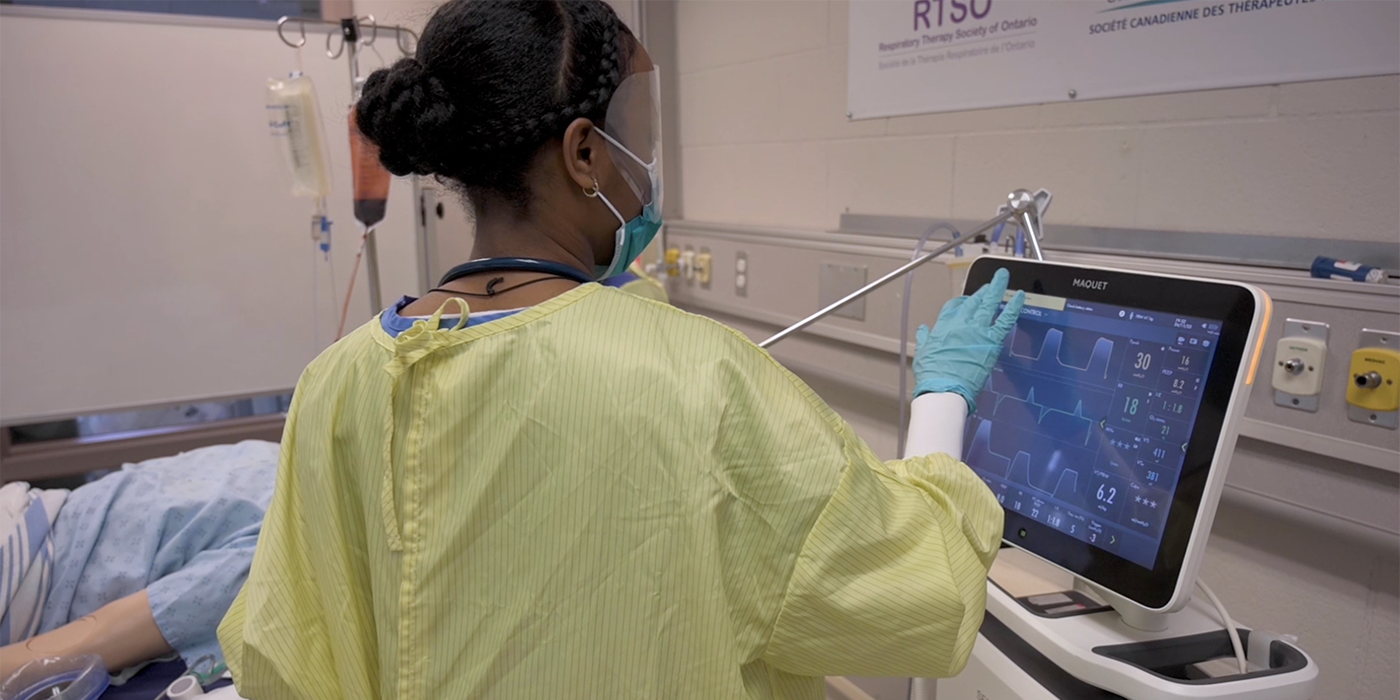
A medical ventilator is used when someone cannot breathe effectively on their own. These machines support oxygen delivery and help remove carbon dioxide from the body. They are commonly used in critical care, during surgery and in long-term care settings. While the ventilator itself plays a key role, it does not operate independently. It requires a trained professional.
That role belongs to a respiratory therapist.
Who operates a medical ventilator?
Respiratory therapists are the only healthcare professionals who independently operate a medical ventilator in clinical settings.
“There is no one else in a hospital or home care setting who can fully, independently operate one of these ventilators other than respiratory therapists.”
Physicians determine when a ventilator is needed, but respiratory therapists are responsible for managing it in practice.
Respiratory therapists:
- Set up the ventilator
- Adjust settings
- Monitor patient response
- Troubleshoot issues
Their role connects medical decisions with real-time patient care.
What does a respiratory therapist do with a ventilator?
Using a medical ventilator involves more than turning on a machine. It requires clinical judgment, technical skill and continuous monitoring. Respiratory therapists manage every stage of ventilation, from setup to recovery.
“It’s a very unique skill that RTs have. We do it all the time, whether in the ICU, operating room, long-term care or the patient’s home.”
Image
Setting up a ventilator machine
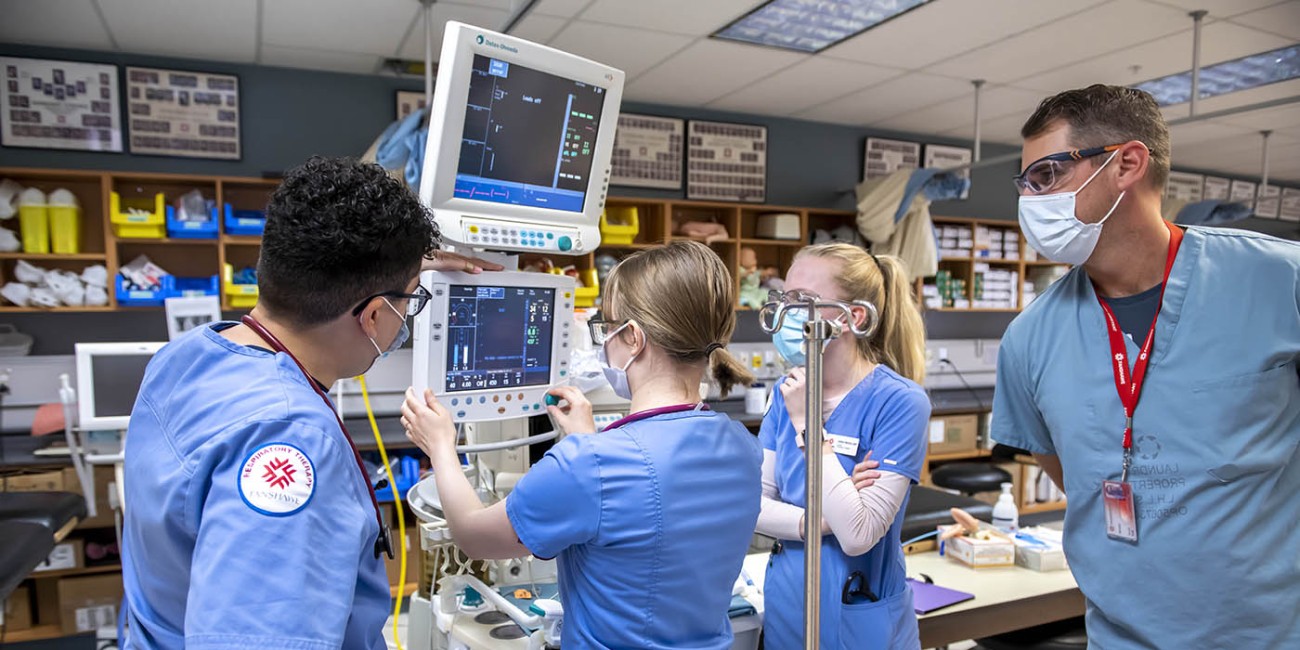
The first step is connecting the ventilator to the patient.
This may involve:
- An endotracheal tube
- A tracheostomy tube
- A non-invasive mask such as CPAP
Respiratory therapists then adjust key settings, including:
- Respiratory rate
- Tidal volume
- Oxygen concentration
- Pressure levels
“RTs learn how to intubate, what type of tubes to use, how to manage them and how to connect everything safely.”
Monitoring and adjusting ventilation
A medical ventilator must respond to the patient’s condition. Respiratory therapists continuously monitor vital signs, ventilator alarms, blood gases, lung function and breathing effort. They adjust the ventilator based on how the body responds.
“RTs need to understand the science of how the machine generates pressure, how lungs inflate and deflate and how to adjust based on what the body is telling you.”
Managing safety and risk
Ventilator use involves risk. Too much pressure can damage the lungs, and sudden changes in a patient’s condition require immediate response.
“Too much pressure can cause barotrauma. That’s why we train RT students thoroughly before they touch a ventilator in a live setting.”
Respiratory therapists are trained to prevent lung injury, manage airway emergencies and respond quickly to complications.
Weaning patients off a ventilator
As a patient improves, ventilator support is gradually reduced. Respiratory therapists guide this process by monitoring readiness, adjusting support levels and observing breathing during trials. This stage requires careful judgment and coordination with the healthcare team.
Image
Will technology replace respiratory therapists?
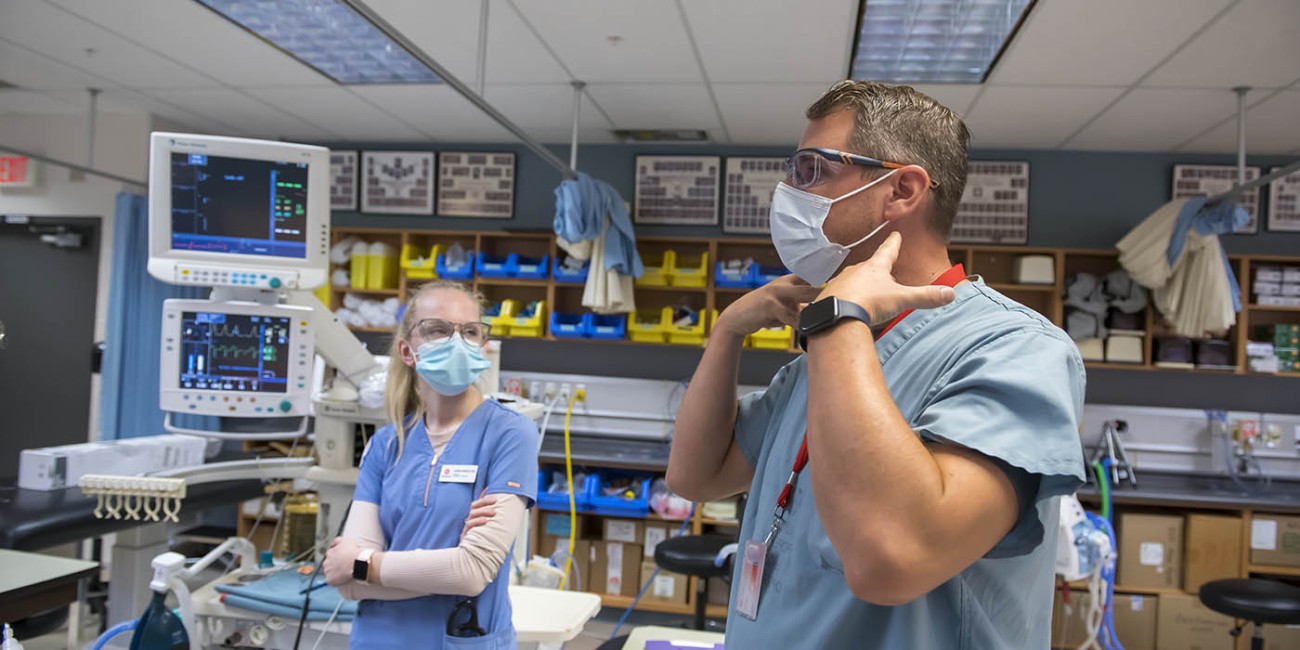
Ventilator technology continues to evolve. Some systems now include sensors and adaptive features that respond to patient needs.
“AI is already being used in ventilators. They’re more sensitive and adaptive now.” But ventilators still require human oversight. “Will AI replace RTs? Probably not. It’s going to be a long time before AI can have the empathy required to work with really sick patients.”
More than a machine
A medical ventilator is a critical tool in patient care, but it depends on skilled professionals to function safely and effectively. The ability to manage ventilation safely is one of the specialized skills developed through respiratory therapy education and clinical training. Respiratory therapists bring the knowledge, judgment and care needed to manage ventilation from start to finish. For patients who rely on assisted breathing, that expertise is essential.
This article was developed by Swapthika Nallavelli, Marketing Management student. Brought to you in collaboration with Village Creative, an experiential learning opportunity at Fanshawe College.
Related Blog Posts
Image

Which Pre-Health Sciences Pathway Program is best for you?
October 1, 2026
Choosing the right post-secondary program can feel overwhelming, especially if you’re interested in healthcare but aren’t sure which career path within health sciences is right for you.
A 1-year Pre-Health Sciences Pathway program can help you explore
Image

How to Redesign Your Backyard | Step-by-Step Landscape Design Guide
May 13, 2026
Learn how to redesign your backyard with this step-by-step guide. Discover landscape design tips, planning strategies, and expert advice for beginners.
View Blog Post
Image
Future of Pharmacy in Canada | Trends, Scope & Career Opportunities
May 13, 2026
Explore the future of pharmacy in Canada, including expanded roles, prescribing powers, and career opportunities for pharmacy technicians and assistants.
View Blog Post