
Published
Monday, May 11 2026
Last Updated
An interview with Claudio Mastroianni, Program Coordinator, Welding and Fabrication Technician Program
Welding involves heat, electricity and metal. That combination creates real risk if proper precautions are not followed. Work may take place in controlled shop environments or outdoor job sites, which means exposure to different welding hazards depending on the conditions. Understanding safety when welding is not optional. It is a core part of the trade.
Common welding hazards
Welding exposes workers to multiple hazards at once. Knowing what to watch for is the first step in reducing risk.
Fumes and gases
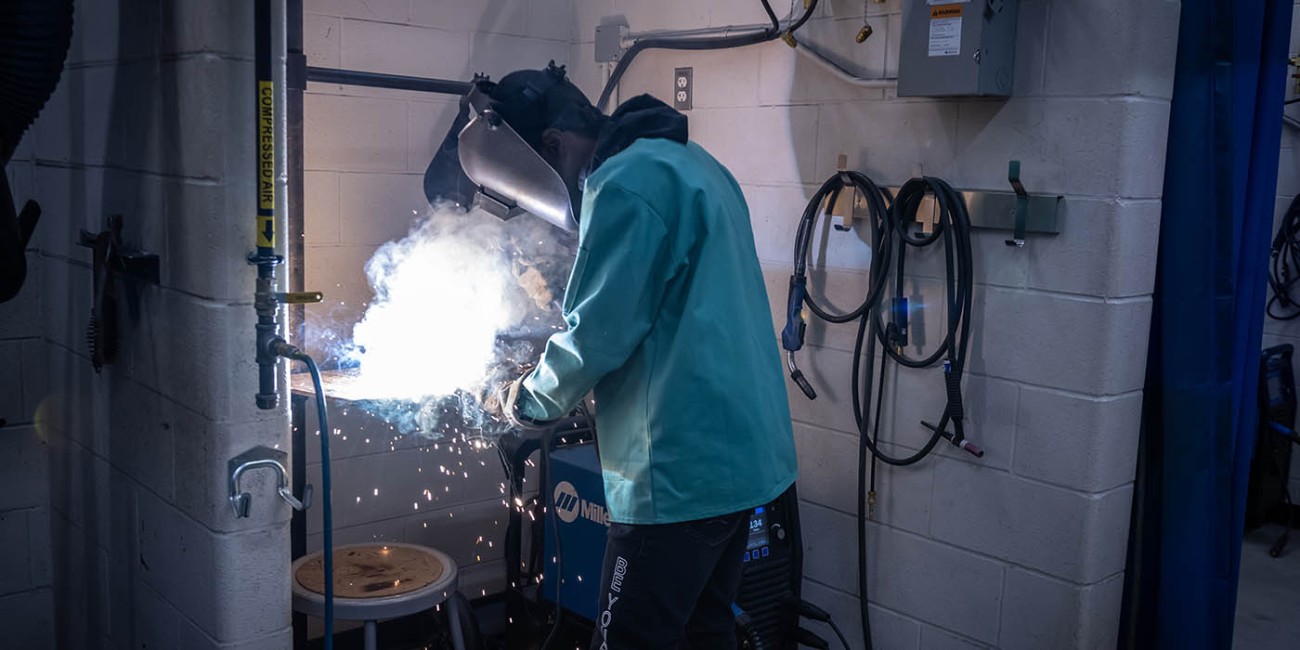
Welding produces fumes and gases that can be harmful without proper ventilation. Different metals respond differently during welding, which can affect both the welding process itself and the types of fumes or contaminants produced.
To reduce these risks, welders use controls such as: respirators, exhaust ventilation systems.
Radiation: UV and IR exposure
Arc welding produces ultraviolet and infrared radiation.
This can: burn skin, damage eyes
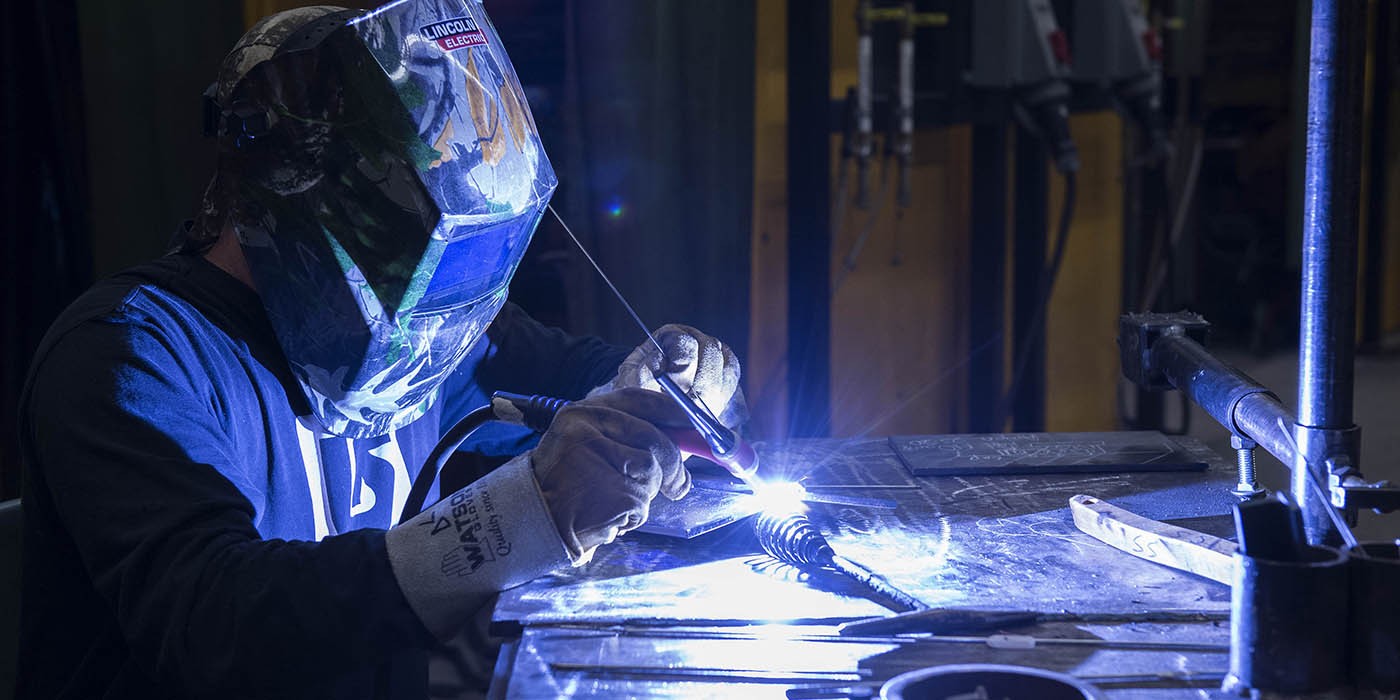
Proper PPE is essential, including: welding helmets, gloves and flame-resistant clothing
Electric shock and burn
Electric shock is one of the most serious welding risks.
To reduce this risk: cables must be properly insulated, equipment must be grounded and gloves must remain dry
Even small mistakes can lead to serious injury.
Fire and explosion risks
Sparks, heat and molten metal create constant fire hazards.
Welders must: clear flammable materials from the area, use fire blankets when needed and keep a fire extinguisher nearby.
Noise and physical strain
Welding often involves grinding, cutting and working in awkward positions.
This can lead to: hearing damage, long-term strain or injury.
Protection includes: hearing protection, proper positioning and correct equipment setup.
Image
WHMIS and safety training in Canada
Welding safety training is an ongoing requirement in Canada. WHMIS training is typically refreshed yearly and helps welders:
- Identify hazardous materials
- Understand Safety Data Sheets
- Choose the correct fire extinguisher
- Respond to emergencies
This training ensures welders stay aware of evolving workplace risks.
Why safety training matters from day one
Welding safety is not something learned after the fact. It is built into training from the beginning. At Fanshawe College, students use PPE, follow procedures and learn how to manage risk while working with real equipment. This prepares them for real job sites where welding safety is part of everyday work.
Learning how to weld includes learning how to work safely. Understanding welding hazards, using the right equipment and following proper procedures allows welders to work confidently and reduce the risk of injury. These habits start early and they carry through every stage of a welding career.
This article was developed by Trong Truong Son Vu, Honours Bachelor of Commerce - Digital Marketing (Co-op) student. Brought to you in collaboration with Village Creative, an experiential learning opportunity at Fanshawe College.
For any media inquiries, please reach out to mediainquiries@fanshawec.ca
Recent News
-
October 23, 2026
Poppies available starting October 24
Read StoryOn October 24, Canadians are encouraged to start wearing poppies in honour of our veterans and... -
October 22, 2026
Temporary service interruptions related to the global PHP outage
Read StoryAs many organizations around the world continue to respond to what is becoming known as the "PHP... -
October 22, 2026
Dell Top Tech sale, October 2026
Read StorySavings for Fanshawe students and employees Looking for a new laptop, monitor or desktop? Dell...
Recent News
-
May 8, 2025
Construction Delays
Read StoryDue to ongoing construction in the area, there may be delays in reaching our clinic. We kindly ask... -
April 15, 2025
New Spring Schedule
Read StoryWe’re excited to announce that the spring schedule is now available on our website as we transition... -
December 16, 2024
2025 Pricing Adjustment
Read StoryEffective January 1st, our fees will increase to $30 per treatment. We understand that this is a...