
Reading Time
3 minutes
Published
Monday, May 11, 2026
Last Updated
An interview with Claudio Mastroianni, Program Coordinator, Welding and Fabrication Technician Program
If you are looking to learn welding, it can be hard to know where to begin. Different welding processes exist because metals, thickness and job conditions vary across work environments. Some are used in controlled shop environments. Others are designed for outdoor or heavy-duty work. Understanding the basics is the first step.
What is MIG welding and why beginners start here
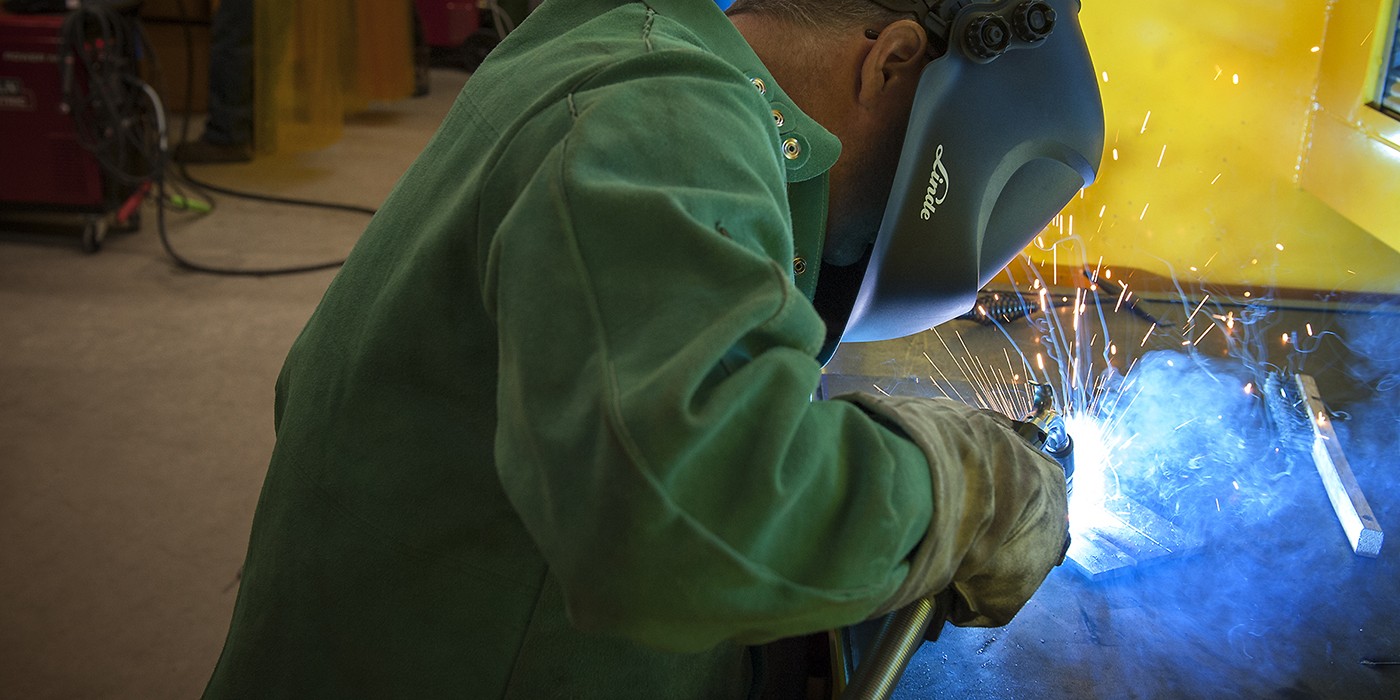
MIG welding, also known as metal inert gas welding or gas metal arc welding, is often the starting point for new welders. It works by feeding a continuous wire electrode through a welding gun while shielding gas protects the weld from contamination. This process is commonly used for steel and aluminium and is widely used in production environments. Because the wire feeds automatically, beginners can focus on positioning and control instead of constantly managing the electrode. For this reason, MIG welding is often considered the most accessible way to learn how to weld.
MIG vs TIG welding: what’s the difference?
One of the most common comparisons for beginners is MIG vs TIG welding. The difference comes down to speed, control and application.
MIG welding is faster and easier to learn, making it ideal for beginners and production work
TIG welding is slower but more precise, often used for detailed or high-quality finishes. TIG welding uses a non-consumable tungsten electrode and often requires the welder to manually add filler material.
“Gas tungsten arc welding produces high quality, precise welds, but it takes longer for students to catch on.”
For most beginners, MIG welding is the starting point, while TIG welding is developed later as skills improve.
Image
Other common types of welding
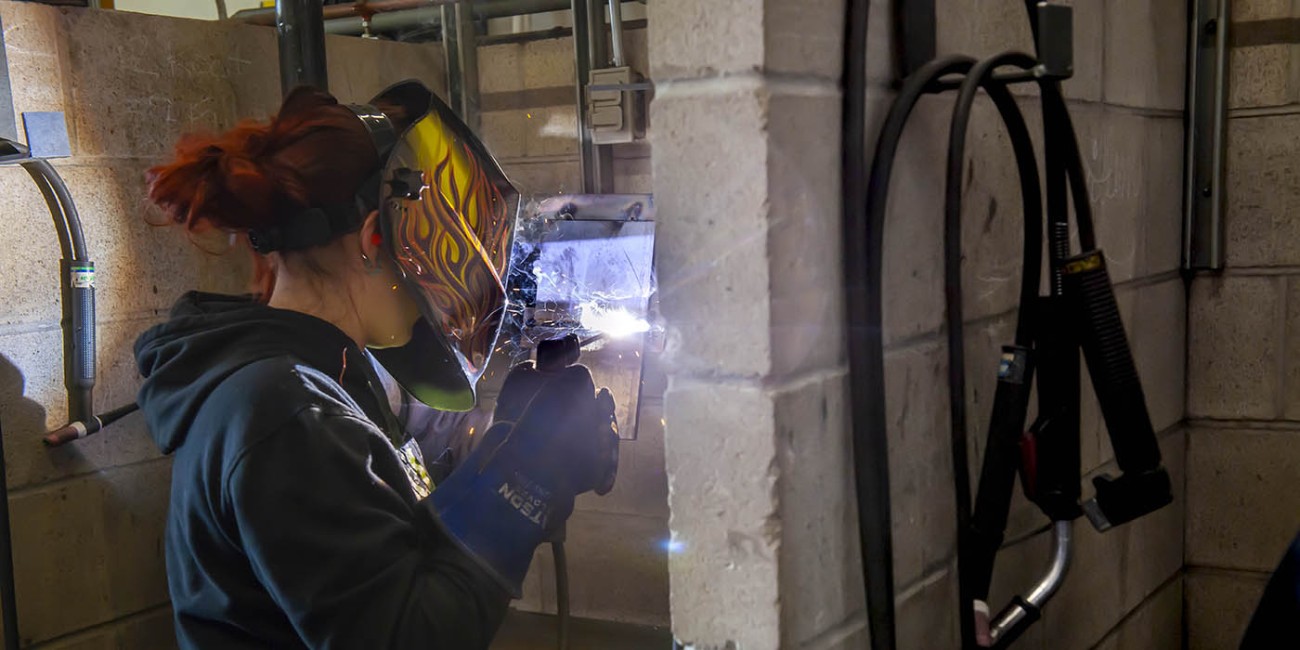
Once you understand MIG welding, other methods become easier to learn. Each type of welding is suited to different materials, environments and levels of precision, because metals respond differently to heat, contamination and welding techniques.
Stick welding
Stick welding uses a flux-coated electrode that creates its own shielding gas as it burns. It is often used outdoors or for repair work because it is portable and does not rely on external gas. The learning curve is higher than MIG welding, but it is essential for field work.
TIG welding
TIG welding produces clean, precise welds, especially on stainless steel and aluminium. It requires more control and coordination, making it more advanced than MIG welding.
Flux cored arc welding This process uses a tubular wire filled with flux. It can be used with or without shielding gas and is often chosen for heavy fabrication because of its high output. It is easier to learn than TIG or stick welding but still requires consistency.
Submerged arc welding Submerged arc welding is a more specialized process. The weld is formed under a layer of granular flux, which protects the weld and stabilizes the arc. “You have to be specially trained to use submerged arc welding, and it is used a lot in automated processes.”It is typically used for thick materials and long, straight welds in large-scale fabrication environments. Processes like this also reflect how welding is changing through automation, robotics and AI-supported systems that are becoming more common across the industry.
Which welding process should you learn first?
For beginners, starting with MIG welding is the most practical choice. It allows you to build confidence quickly while learning the fundamentals of welding. From there, many welders move into:
- Flux cored arc welding for heavier work
- Stick welding for outdoor and repair applications
- TIG welding for precision and finish
This progression helps build both skill and versatility. For some welders, those skills eventually lead to specialized careers such as underwater or hyperbaric welding, which require both advanced welding experience and commercial diving certification.
Learning how to weld with confidence
Learning how to weld is not just about understanding processes. It is also about learning how to work safely with heat, electricity and welding equipment in real shop environments. At Fanshawe College, students work with different welding methods while developing the safety practices required in the trade.
Getting started with welding
Every welder starts somewhere. For most, that starting point is MIG welding. Once the fundamentals are in place, the rest becomes easier to build on.
This article was developed by Trong Truong Son Vu, Honours Bachelor of Commerce - Digital Marketing (Co-op) Student. Brought to you in collaboration with Village Creative, an experiential learning opportunity at Fanshawe College.
Related Blog Posts
Image

See Your Degree Differently: Inside Fanshawe’s Digital Marketing Degree
October 23, 2026
Fanshawe's Digital Marketing graduate, Josh Millard, recounts his experience learning industry-specific skills & building connections that set up his career.
View Blog Post
Image

Which Pre-Health Sciences Pathway Program is best for you?
October 1, 2026
Choosing the right post-secondary program can feel overwhelming, especially if you’re interested in healthcare but aren’t sure which career path within health sciences is right for you.
A 1-year Pre-Health Sciences Pathway program can help you explore
Image
Future of Pharmacy in Canada | Trends, Scope & Career Opportunities
May 13, 2026
Explore the future of pharmacy in Canada, including expanded roles, prescribing powers, and career opportunities for pharmacy technicians and assistants.
View Blog Post