
Interactive Media Design
Image

Recognized with multiple President’s Distinguished Awards and the Program Excellence Award (Silver) from Colleges and Institutes Canada, the Interactive Media Design program blends practical, technical skills with creative design principles in a dynamic, industry-replicated environment.
Build a versatile, competitive digital media skill set blending visual design principles with hands-on technical training. You’ll master core technologies and professional practises of front-end web development, and work extensively with professional tools used for interface design, layout, motion graphics, prototyping, and visual storytelling.
Throughout the program, you’ll also explore how generative AI platforms, like Adobe Firefly, and AI-driven video editing tools can streamline creative workflows, accelerate prototyping, and boost productivity. Collaboration and workflow are central to the learning experience, and you will work in studio environments where Agile methodologies, project planning tools, and collaborative development practices are part of everyday learning.
Participate in a live client project, functioning as a mini creative studio. Your student team will design and deliver a comprehensive marketing campaign for a real client, producing print materials, promotional videos, social media content, and a fully responsive website with a custom content management system. This project gives you real-world experience and a portfolio-ready showcase of your ability to meet client needs, meet deadlines, and deliver high-quality digital solutions.
This hands-on experience is enriched by industry guest speakers who share valuable insights, helping you understand trends, career pathways, and practical strategies for success.
Whether you aim to join a digital agency, launch your own freelance practice, or bring new ideas to life as a creative entrepreneur, this program gives you the tools and network to make it happen.
Graduates of Fanshawe’s Interactive Media Design program are well-prepared for careers in a variety of creative and technology-driven industries. Opportunities can be found in web development firms, software development companies, digital media studios, and creative advertising agencies.
Graduates typically find employment as:
Did you know Fanshawe consistently ranks high in graduation employment rates among large colleges in Ontario?
Here are some examples of career opportunities for graduates of Fanshawe’s Interactive Media Design program:
Front-End Web Developer
Build responsive, interactive websites using HTML, CSS, JavaScript, and modern frameworks. Collaborate with designers and back-end developers to bring digital experiences to life across devices and platforms.
Software Developer
Develop and maintain applications and digital tools, contributing to both front-end and back-end systems. Apply industry best practices to deliver efficient, scalable software solutions.
UI Designer
Design intuitive interfaces and user experiences for websites, apps, and digital products. Use wireframing and prototyping tools to translate user needs into elegant, functional design solutions.
3D/Motion Designer
Produce high-quality animations, videos, and motion graphics for web, social media, and marketing campaigns. Bring visual storytelling to life across digital platforms using tools like After Effects and Cinema 4D.

Fanshawe completely changed my life. Here I met the best people I have ever had in my life and built strong bonds with them. At Fanshawe I found my first mentor who helped me to grow up as a coder. Fanshawe's web design program opened doors into the interactive media industry. And I can honestly say that my years at Fanshawe are the best in my life!
The graduate has reliably demonstrated the ability to
1. complete both individual and collaborative interactive media projects effectively.
2. use best practices and tools to design and develop dynamic, rich-media content.
3. contribute to the assessment of the requirements of an interactive media project.
4. contribute to the development, budgeting, planning and professional presentation of an interactive media project.
5. design a media project (interface, navigation, graphics, text treatment) using current best practice design and development principles, and applying conceptual and theoretical frameworks.
6. build effective and dynamic Web sites and/or mobile applications.
7. identify and analyze ethical and professional issues arising in an online environment.
8. apply research and conceptual skills to propose possible solutions for mobile/multimedia/Web development problems.
9. use creative and critical thinking techniques in the effective design, development and implementation of an interactive media project.
10. contribute to the assessment of the financial, technical and artistic success of an interactive media project.
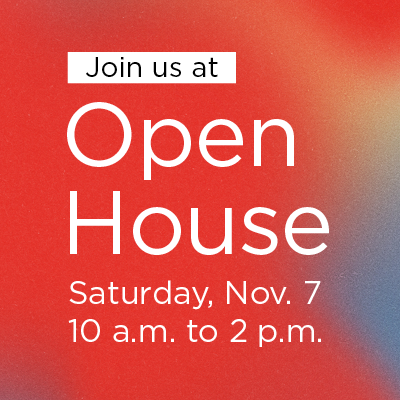
Join Us for Open House
Bring your future into focus. Connect with faculty and current students, explore programs and career possibilities, and get the answers you need about admissions, financial aid, student life and more!
Marco De Luca
Ontario Secondary School Diploma (OSSD), or equivalent, or a mature applicant.
Students who do not have a high school diploma may wish to consider taking the Academic and Career Entrance (ACE) grade 12 Equivalency Certificate.
| Test | Score |
|---|---|
| TOEFL iBT (2026) | Overall score of 4.5 with no score less than 4 in any band |
| TOEFL i8BT (Prior to 2026) | 79 |
| IELTS Academic | Overall score of 6.0 with no score less than 5.5 in any of the four bands |
| CAEL | Overall score of 60 with no score less than 50 in any of the four bands. score of 80 in listening |
| PTE Academic | Minimum score of 53 with no score less than 45 in any of the four bands |
| Cambridge English | Overall score of 169 with no language skill less than 162 |
| ESL4/GAP5 | Minimum grade of 80% in Level 8, 75% in Level 9, or 70% in Level 10 |
| Duolingo | Overall score of 105, with no score lower than 95 |
| LanguageCert Academic | Overall score of 65 with no score less than 60 in any of the four skills |
Where the number of eligible applicants exceeds the available spaces in the program, the Applicant Selection Criteria will be:
| Level 1 | ||||
| WRIT-1037 | Reason & Writing 1-Contemporary Media | 3 | ||
| This course will introduce contemporary media students to essential principles of reading, writing, and reasoning at the postsecondary level. Students will identify, summarize, analyze, and evaluate multiple short readings and write persuasive response essays to develop their vocabulary, comprehension, grammar, and critical thinking. | ||||
| MMED-1050 | Digital Media Theory & Project Mgmt 1 | 3 | ||
| This course provides an essential foundation for success in the Interactive Media program by combining modern project management strategies with emerging technologies. Students will explore time management, collaboration, and professional communication skills while engaging in hands-on learning with artificial intelligence (AI) tools to support creativity, planning, and personal learning. Through lectures, labs, and exercises, students will develop critical thinking abilities, learn the fundamentals of accessibility and digital media file formats, and build confidence in documenting and presenting their work. By the end of the course, students will have designed their own AI tutor, collaborated on projects, and submitted a capstone deliverable that demonstrates their readiness for future interactive media work. | ||||
| MMED-1051 | Design & Image 1 | 3 | ||
| This course introduces the principles and techniques of effective digital design for the web, with a focus on user interface (UI) design for interactive media. Learn to create clear and functional UI wireframes, apply image optimization techniques for web performance, and develop interactive UI prototypes. Design fundamentals, visual communication, and layout strategies are explored using Figma, Adobe Photoshop CC and Adobe Illustrator CC as primary tools for creating professional, screen-based experiences. | ||||
| MMED-1052 | Multi-Media Production | 3 | ||
| This course provides a comprehensive introduction to web development, focusing on the foundational technologies used to create modern web pages. Student will learn HTML5 to structure content using semantic tags that enhance accessibility, SEO, and the document outline. Explore CSS to style web pages and create visually appealing layouts, with a focus on design principles using CSS Grid. Understand the importance of valid HTML and CSS to ensure proper functionality and compatibility across browsers. | ||||
| MMED-1053 | Visual Communication 1 | 3 | ||
| This course introduces the theory of visual design and layout in the interactive media field, with a focus on User Interface (UI) design and an introduction to User Experience (UX) principles. Emphasis is placed on visual hierarchy, layout, and design strategies that enhance the user experience across a variety of screen-based applications. | ||||
| MMED-1054 | Multimedia Authoring 1 | 3 | ||
| Learn version control with Git and GitHub as a foundation for effective collaboration and code management in modern web development. Explore industry-standard tools, technologies, and workflows essential for building interactive, user-focused web applications in team-based environments. The course also extends CSS concepts introduced in Multi-Media Production, focusing on advanced styling techniques to create interactive, accessible, and visually engaging web interfaces. | ||||
[1] Total program costs are approximate and subject to change. They do not include additional fees such as the health and dental plan, bus pass, or general expenses. Learn more about ancillary and additional fees.

