
See the world through an Indigenous lens, and turn that insight into action.
In this three-course designation, you’ll combine self-paced online learning with a hands-on community engagement project to hone the dialogue, empathy, and partnership skills today’s employers value most. Guided by Knowledge Keepers, faculty, and guest speakers, you’ll practice Indigenous approaches to communication, reciprocity, and conflict resolution, then apply them in real-world settings to help advance reconciliation and social impact.
What you’ll gain
- Cultural Fluency: Confidently navigate First Nations, Métis, and Inuit perspectives in classrooms, workplaces, and community projects.
- Relationship-Building Toolkit: Master active listening, circle dialogue, and consensus-based decision-making to foster lasting partnerships.
- Conflict-Wise Leadership: Learn mediation strategies that transform misunderstanding into collaborative problem-solving.
- Career Edge: Stand out in fields such as community development, public service, and corporate social responsibility with demonstrable cultural competence.
- Expanded Network: Connect with peers, Knowledge Keepers, and community leaders committed to strengthening Indigenous–non-Indigenous relations.
Format
The specialization includes three courses plus 10 hours of participation in cultural continuity workshops, socials, activities, ceremonies.
What you’ll earn
You’ll earn the Indigenous Community Relations Specialization when you successfully complete the course requirements. The specialization will be added to your academic record listed with your program credential earned.
How you will learn - Authentic Teaching and Learning
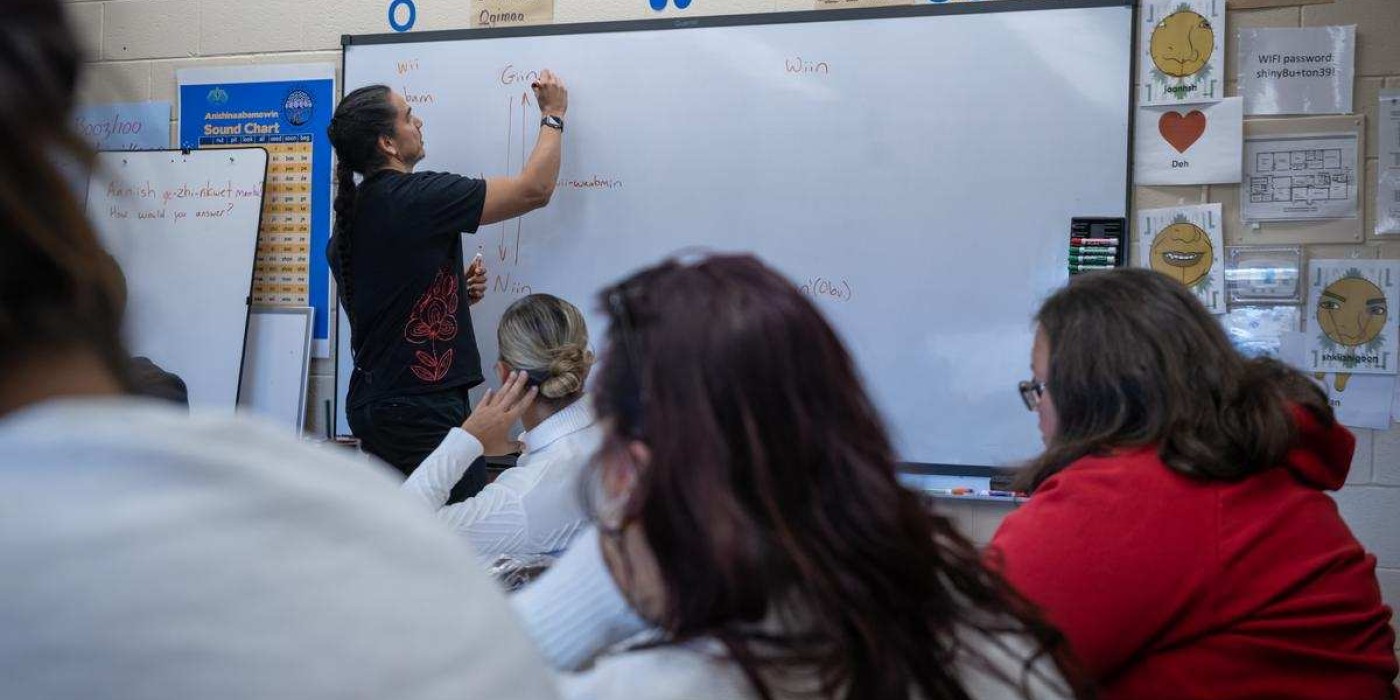
Indigenous faculty using Indigenous ways of teaching and learning provide you with the ability to go beyond learning about Indigenous peoples, to a deeper understanding by sharing their experiences and knowledge to help you in understanding the principles of true reconciliation in practice - Learn, Understand, Act, Reflect.
Requirements
Must complete one of the two following core courses:
INDG - 3005: FNMI Perspectives
First Nations, Métis and Inuit (FNMI) realities in Canada are incredibly diverse, complex, and perhaps intimidating. Part of understanding colonization and reconciliation means learning about applying Indigenous ways of seeing the world. This course seeks to move the learner through 1) self-reflection; 2) learning about FNMI realities from FNMI peoples; 3) respectful engagement, all through the application of FNMI concepts. The teaching of "all my relations," truth, goose leadership, and reciprocity ground the topics of this course in Indigenous theory and practice.
INDG 1007 - Community Relationships
This course will survey the foundational relationship with Canada's Aboriginal communities, and the issues, practices, and considerations critical to relationship development. Students will explore the complexities and power relationships within, and amongst Aboriginal communities, and reflect on how Aboriginal worldviews, philosophies, and experiences inform contemporary professional practices. In this context, students will explore self-awareness; local, provincial, and national community dynamics; intergovernmental relations; political, social, and economic development and management strategies; activism and art; and legal and ethical considerations.
In addition, must complete two from the following list of complementary courses:
INDG-1027: Reservation Dogs
This course delves into the day-to-day wellness of Indigenous youth by exploring themes presented in the television series "Reservation Dogs." Through critical analysis of selected episodes and reflective discussions, students will examine topics such as identity, cultural heritage, coping with loss, friendship, family dynamics, and empowerment. The course aims to provide students with insights into the challenges and strengths of Indigenous youth, offering strategies to navigate personal wellness and promote resilience in their own lives.
INDG 1022 Indigenous Women: Identity, Rights and Resilience
Centering the voices and stories of Indigenous women, this course examines their historical and contemporary experiences within pre-colonial, colonial, and decolonizing contexts and a lens towards the future. Key topics include: Indigenous women's identity, colonization as gender-based discrimination and violence impacting Indigenous women, girls, and two-spirit individuals, human rights violations, resistance to colonial impositions, reclaiming identity and culture, constructing de-colonial identities, and action for change in communities. An important aspect examined is reconciliation and the role of Settler peoples to act in response to listening and learning from Indigenous women as to what can bring about justice.
INDG 1013 Indigenous Resistance
Students gain exposure to Indigenous resistance movements across the globe. Within this framework, students learn about the current efforts of Indigenous artists, authors, athletes, photographers, musicians, filmmakers, educators, and language revitalizers who collectively are changing stereotypes about Indigenous populations. Students learn first-hand from guest speakers about ways they can co-facilitate this movement and acquire a deeper knowledge of Indigenous people and their vibrant history, which is reshaping conceptions of the future.
INDG 1031 Indigenous Learning Camp
Students will learn about traditional Indigenous values, philosophies, spirituality, teachings and ceremonies related to relationships with the land. This course will primarily be delivered as a land-based experiential learning camp, off site, under the direction of Indigenous knowledge keepers, elders and faculty.
INDG 3003 Exploring Indigenous Ways of Knowing
Students engage directly with the traditional Indigenous knowledge of Southwestern Ontario through the words of local Elders and community-recognized knowledgeable community members. Through exposure to traditional knowledge through first-hand experience, which continue to guide Indigenous people both locally and globally, a sense of community and respect for culture and identity will be fostered. Originating through local community members input, this course provides students with an introduction to customary Indigenous knowledge which is the foundation for First Nations Studies. Please note that this course incorporates mandatory experiential learning activities. Students will be required to participate in activities that occur outside of the regularly scheduled lecture hours and/or on weekends. This applies to in-class sections of this course only.
INDG 3004 Contemporary Knowledge
By examining current realities that are defining the evolution of Indigenous Knowledge, students will gain a foundational capacity for participating in the future growth of this knowledge. Beginning with some of the original agreements that local Indigenous groups made with Europeans, to present-day decisions affecting urban and rural Indigenous populations, students will gain the ability to navigate current power structures. Major themes include: identity development within the constructs of European legislation, efforts for language revitalization, responsibility for environmental protection, local band council operations and the ethics of preserving Indigenous knowledge. Students will engage directly with local Indigenous decision-makers, Elders, and knowledgeable guest speakers and be encouraged to determine ways for appropriately managing resolutions. Please note that this course incorporates mandatory experiential learning activities. Students will be required to participate in activities that occur outside of the regularly scheduled lecture hours and/or on weekends. This applies to in-class sections of this course only.
INDG 6000 Indigenous Peoples in Canada
This course will provide an overview of the histories and contemporary times of the Indigenous Peoples of Canada which includes First Nations, Metis and Inuit peoples from precontact to present day. The history of colonization, European contact, settlement, treaties, reserves and Indian Act legislation will first be reviewed to provide students with an understanding of the social and historical conditions that have brought about the present state of Indigenous peoples and communities. Students will examine the continuing impact of social, cultural, economic, and political trends and developments on Indigenous individuals and communities.
INDG 7001/2/3/4 Indigenous Studies
A survey of Canadian First Nations issues from academic, literary, artistic, and community perspectives. A number of themes are drawn on in this course, including Indigenous knowledge, cultural traditions, contemporary issues, historical background, oral history, socio-political contexts, arts, language and environment. Please note that this course incorporates mandatory experiential learning activities. Students will be required to participate in activities that occur outside of the regularly scheduled lecture hours and/or on weekends. This applies to in-class sections of this course only.
INDG 1033 Belief, Balance and Community Well-being
This course invites learners to explore how belief systems shape identity, decision-making, and community well-being through Original Peoples teachings, oral stories, and circle dialogue. Learners engage with Creator’s Four Laws, the Medicine Wheel, Wiin-Gush Miikon (life road), and teachings around trauma, shame, stereotypes, ceremony, and spirituality. Throughout, students strengthen self-awareness and develop culturally grounded approaches to personal and community healing.
Upcoming courses:
INDG 103X Colonialism, Race and Identity
Course curriculum and description are currently in development.
INDG 103X Culture and Identities
Course curriculum and description are currently in development.
To learn more, contact Kristen Longdo, Indigenous Strategic Learning Guide:
Table