
Mechanical Techniques
Image

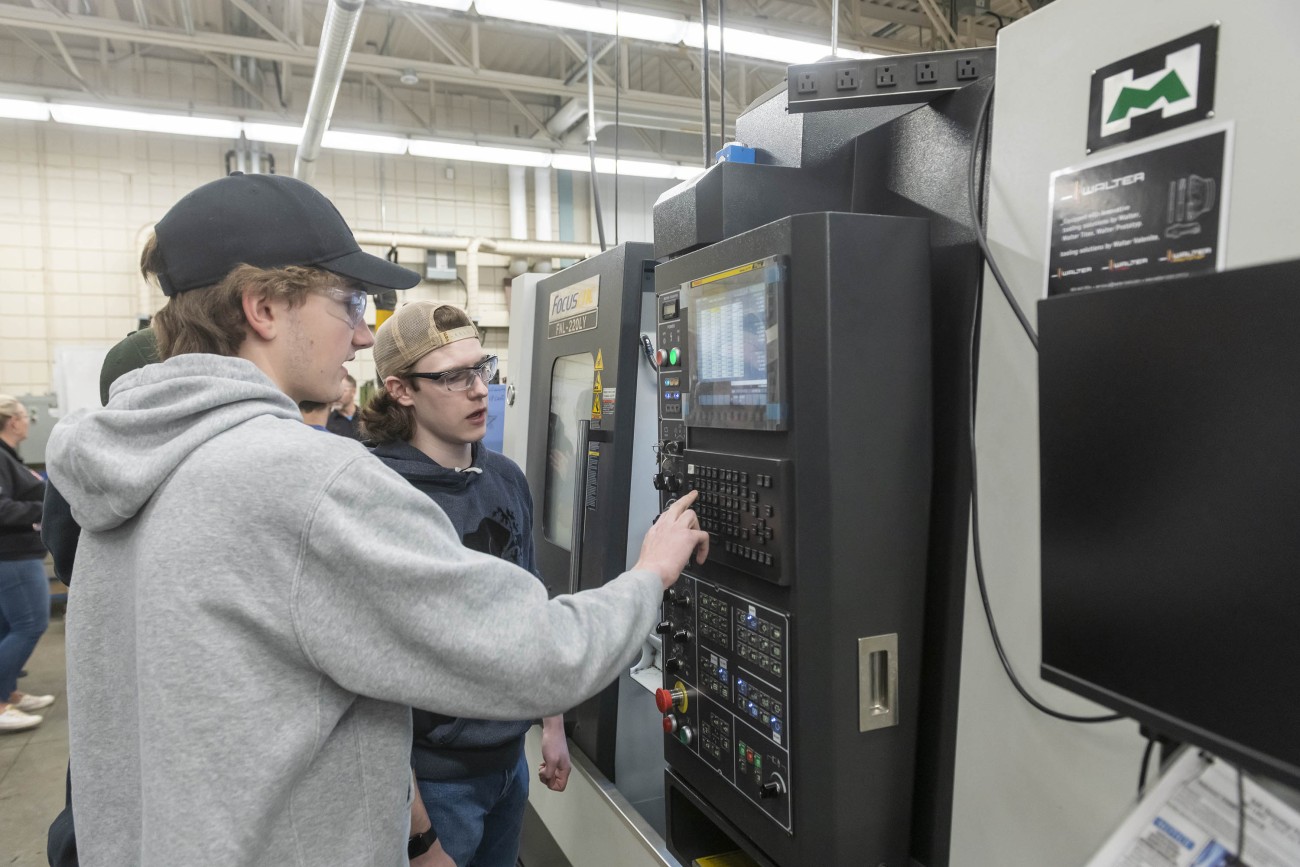
Throughout the program, students learn to plan machining processes, set up and operate conventional and CNC machining equipment, troubleshoot production challenges, design parts and apply their skills to workplace scenarios. A strong emphasis is placed on hands‑on learning, giving students practical experience in metal machining and programming environments that reflect current industry practices.
The program builds a solid technical foundation through courses in machine trade theory, machine shop practices, mechanical blueprint reading, and applied mathematics. As digital technology plays a critical role in today’s manufacturing sector, students are introduced to computer applications, computer numerical control technology, and computer‑aided design (CAD) using both 2D and 3D tools. These skills are reinforced through applied projects and real‑world problem solving.
Developed in collaboration with industry partners, the MQC program focuses on technical competence, problem‑solving ability, and employability skills. Graduates complete the program with hands‑on experience, industry connections gained through co‑op placements, and the practical skills needed for entry‑level opportunities and continued learning in machining and manufacturing.
Graduates are prepared for entry‑level roles such as manufacturing technician, production technician, machining assistant, quality support technician, or fabrication assistant, and for further training or apprenticeship pathways within the skilled trades.
Did you know Fanshawe consistently ranks high in graduation employment rates among large colleges in Ontario?
Here are some examples of career opportunities for graduates of Fanshawe’s Mechanical Techniques program:
1. Complete all work in compliance with legislation, regulations, standards, guidelines,
and industry practices.
2. Follow quality control/quality assurance procedures to meet industry and
organizational standards and end-use requirements.
3. Comply with health and safety legislation to prevent personal and public incidents.
4. Follow sustainability protocols to prioritize resource efficiency, and environmental
conservation.
5. Troubleshoot mechanical problems by applying mechanical principles to provide
repair solutions that meet manufacturer and/or customer specifications.
6. Use technology to support the design and implementation of mechanical
engineering projects.
7. Assist in the interpretation and preparation of engineering drawings, models, and
other technical documents according to project specifications.
8. Contribute to the design, manufacturing, assembly, inspection and repair of
mechanical components and systems according to required specifications.
9. Select, inspect, use and maintain machinery, tools and equipment for the
installation, manufacturing and repair of mechanical components, assemblies and
systems.
10. Contribute to the implementation and evaluation of projects to meet business
objectives within time, cost, and quality constraints.
11. Develop strategies for personal and professional development to enhance work
performance, career progression and mobility
Wayne Dejong
| Test | Score |
|---|---|
| TOEFL iBT | Overall score of 4.5 with no score less than 4 in any band |
| IELTS Academic | Overall score of 6.0 with no score less than 5.5 in any of the four bands |
| CAEL | Overall score of 60 with no score less than 50 in any of the four bands. score of 80 in listening |
| PTE Academic | Minimum score of 53 with no score less than 45 in any of the four bands |
| Cambridge English | Overall score of 169 with no language skill less than 162 |
| ESL4/GAP5 | Minimum grade of 80% in Level 8, 75% in Level 9, or 70% in Level 10 |
| Duolingo | Overall score of 105, with no score lower than 95 |
| LanguageCert Academic | Overall score of 65 with no score less than 60 in any of the four skills |
| Level 1 | ||||
| DRAF-1072 | Blueprint Reading | 2 | ||
| This basic course introduces the student to mechanical blueprint reading. Topics covered will include lines, dimensioning, tolerances, types of projection and methods to interpret working drawings. | ||||
| CADD-1060 | Computer Aided Design 1 | 3 | ||
| This course is designed to introduce the student to two and three dimensional CAD (computer aided design) using CAD software. Topics will include the setup of the user interface, file management, creating sketch and solid model geometry, analyzing and editing of geometry to ensure compatibility for use in toolpaths, creating assemblies and creating engineering drawings. | ||||
| DEVL-1054 | Skills for Career Success | 2 | ||
| This course will cover topics in digital literacy, career management and workplace communication. | ||||
| MACH-1181 | Applied Metal Machining | 4 | ||
| This course will enable the student to produce machined metal parts to the specifications of a technical drawing, by means of safely setting up, programming, and operating CNC Machines. | ||||
| MACH-1182 | Machining Theory | 3 | ||
| This course will provide the student theoretical knowledge to machine metal parts to the specifications of a technical drawing, by means of safely setting up, programming, and operating CNC Machines. | ||||
| MATH-1212 | Mathematics for Trades 1 | 2 | ||
| An introductory level course that teaches students the necessary mathematical skills that will enable them to be successful in the trades programs. | ||||
[1] Total program costs are approximate and subject to change. They do not include additional fees such as the health and dental plan, bus pass, or general expenses. Learn more about ancillary and additional fees.
