
Reading Time
3 minutes
Published
Friday, May 8, 2026
Last Updated
An interview with Sherry Lemcke, faculty Photography
Photography has never been more accessible. But for many beginners, it still feels out of reach. Photos look good, but not quite the way they imagined. The moment is there, but something is missing. It is not just better equipment. It is understanding how the camera works and how to use it with intention. Photography for beginners often starts with trial and error. Changing settings. Hoping something works. Sometimes it does. Most of the time, it does not.A photography course helps replace that uncertainty with a clear process and while the technical side matters, photography is also about perspective and interpretation.
Understanding the fundamentals: where every photographer starts
Every photography course begins in the same place. Light. More specifically, how light is controlled inside the camera.“The exposure triangle is the key. The three things that affect our exposure: ISO, shutter speed, and aperture.”
At first, these settings feel disconnected. One controls motion. One controls depth. One responds to light. But they are always working together.
Shutter speed determines whether motion is frozen or blurred. Aperture controls how much of the image is in focus. ISO supports shooting in different lighting conditions, each with its own trade-offs.
Students also begin to explore photography composition at this stage. Techniques like the rule of thirds help guide where subjects are placed, creating stronger and more balanced images. “It sure is… but once you do it yourself and get that moment, you understand.”
Learning how to use camera settings with purpose
Image
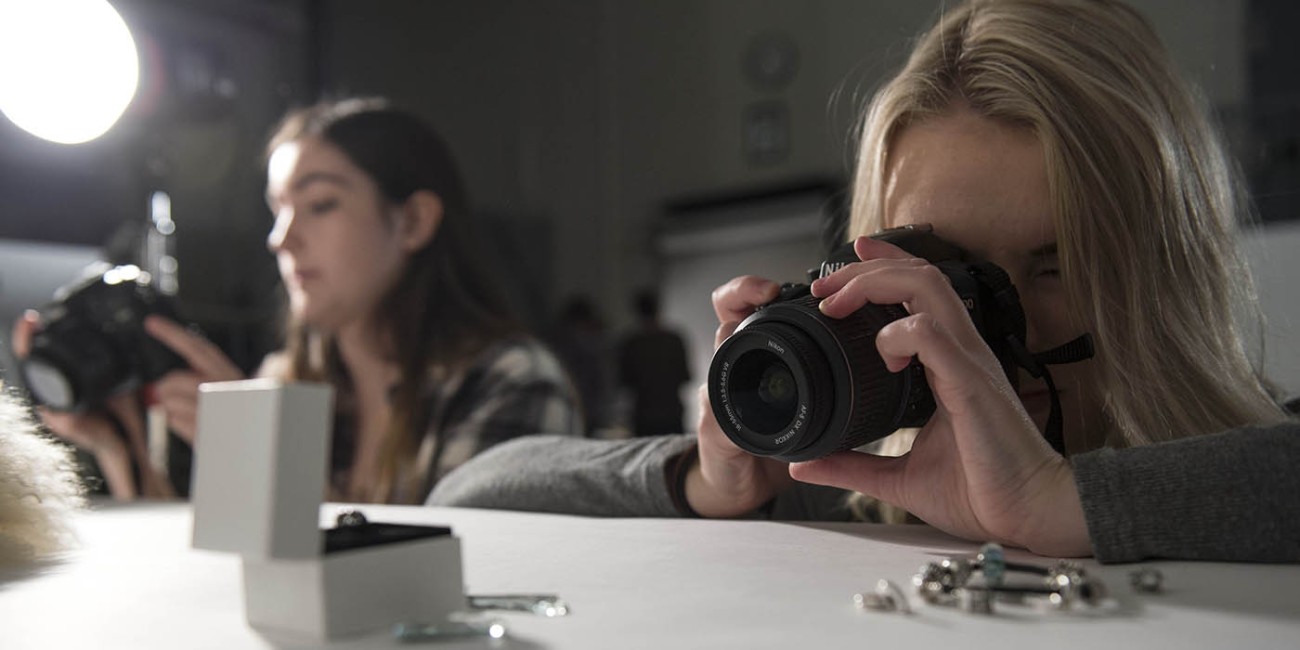
Once the fundamentals are clear, the next step is learning how to apply them. “What you're doing when you're setting your camera settings… you're setting them for what you're trying to create.”
Instead of searching for a single “correct” setting, photographers learn to prioritize based on the situation:
- To capture fast movement, shutter speed becomes the focus
- To create background blur, aperture takes the lead
- In low light, ISO helps support the overall exposure
Professionals prepare before they start shooting. “I’ll even do that before I go out on a shoot… I’ll set up my camera.”This kind of preparation creates consistency and reduces the need to adjust in the moment.
Choosing the right lens: shaping the final image
The camera captures the image.The lens shapes how it looks. “If you're using a wide lens, you're seeing a lot… a longer one narrows that view.”
Different lenses change how a scene is framed, how depth is created and how subjects appear. Wide lenses are often used to capture space and environment. Longer lenses help isolate subjects and compress distance. One of the most important concepts for beginners is distortion. “The wider lenses do cause distortion… the eyes start spreading out, the forehead and nose gets larger.” Small changes in lens choice or positioning can significantly affect the final image.
Why hands-on learning matters
Understanding photography concepts is important. Applying them is what builds skill.That is why hands-on experience is central to a photography course. Repeating shots with different settings, testing lighting conditions and reviewing results all help build practical knowledge. At Fanshawe College, students develop these skills through regular shooting and real-time feedback. This approach helps turn theory into something usable.
From beginner to creative control
Image
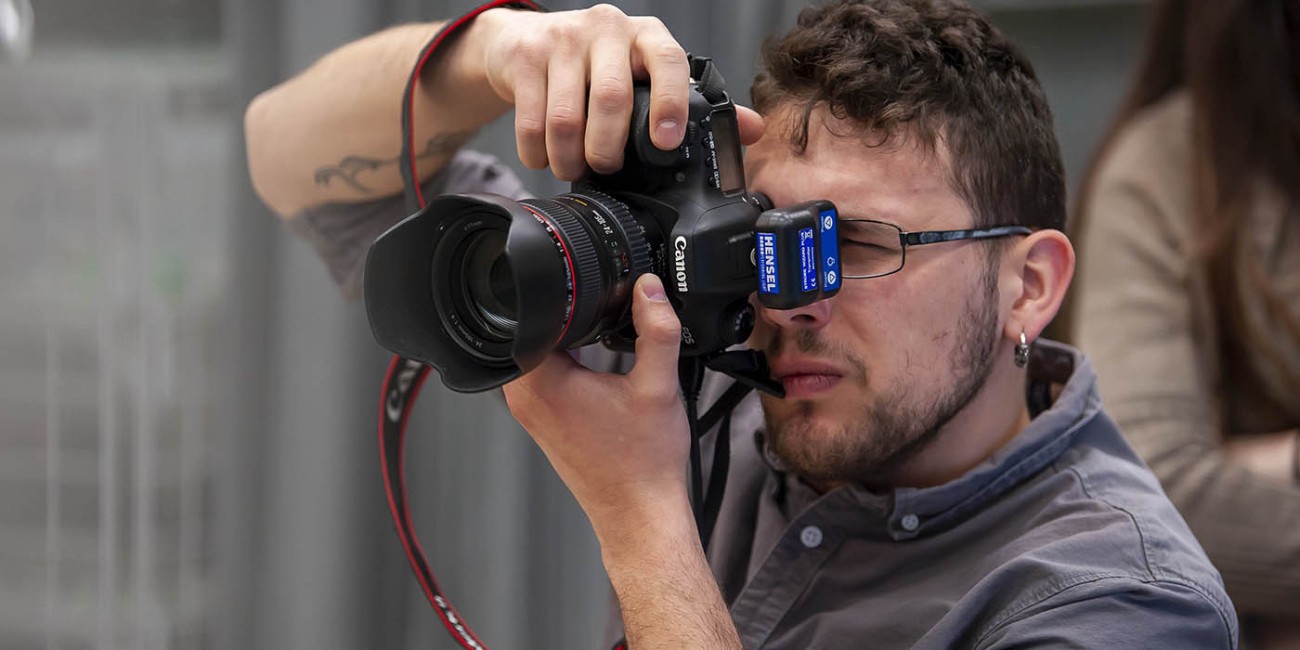
At the start, photography can feel inconsistent. Lighting changes quickly. Settings feel unclear. Results vary. With practice, patterns begin to emerge. Photographers learn how to approach different situations with a process they can rely on. They begin to understand how to adjust settings, choose lenses and compose images more effectively. What once felt unpredictable becomes something they can control.
Your photography journey starts here
Learning photography is not about memorizing numbers. It is about understanding how different elements work together and how to apply them in real situations. With structure, practice and feedback, that understanding builds over time. What once felt unpredictable becomes something you can approach with confidence.
A photography course helps turn that uncertainty into a clear process. From there, photography becomes more than technical, it becomes about perspective and interpretation, something explored further in How photographers learn to see..
This article was developed by Anthony Girgenti, Honours Bachelor of Commerce – Digital Marketing (Co-op) student. Brought to you in collaboration with Village Creative, an experiential learning opportunity at Fanshawe College.