
Professional Butchery Techniques
Image

Develop meat-cutting skills in this butcher training program with hands-on learning in professional culinary labs at Fanshawe’s London Downtown Campus with skilled butchers, faculty and industry partners who actively compete and coach at national and international levels. You’ll develop whole-animal butchery skills, value-added product production, food safety, traceability and yield optimization, all key competencies that industry reports identify as urgently needed (Food Processing Skills Canada - “Securing Canada’s Meat Workforce”).
Labour market studies warn that Canada’s processing sector continues to face extreme shortages, with empty butcher stations rising from 1,700 to more than 10,000 in recent years (Canadian Meat Council). Ontario’s meat sector also reports persistent shortages of trained butchers, who are crucial to maintaining retail and plant operations.
Whether you’re starting in culinary, discovering butchery after beginning another program, or retraining for a stable, hands-on career, this butcher training program will prepare you to step directly into an essential and automation-resilient trade.
Upon graduation, you may also choose to transition into the Retail Meat Cutter 245R Apprenticeship or to earn dual certificates by transitioning into the Culinary Skills program.
If you’re wondering how to become a butcher in Ontario or elsewhere in Canada, read our blog post How to Become a Butcher.
Canada’s meat sector represents nearly 25% of all food and beverage processing sales and exports, yet continues to face long-term labour shortages (Food Processing Skills Canada - “Securing Canada’s Meat Workforce”). This demand creates strong job security for trained butchers entering the field.
Graduates may pursue roles in:
Industry organizations emphasize that Ontario needs more trained culinary trades workers, including butchers, to support retail, restaurant, and food production businesses (CBC London - “Butchers, bakers and food makers: More culinary trades workers are needed in London”).
Fanshawe Professional Butchery Techniques graduates will enter a labour market actively seeking skilled, hands-on professionals.
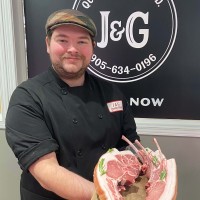
My learning experience at Fanshawe in the Professional Butchery Techniques program completely changed my career in such a positive way. It was more than just learning high-level butchery skills. The program also taught me about the industry, from animal processing to running a successful business. Because of the knowledge and confidence I gained, I now compete in butchery competitions and work alongside some of the best butchers in the country. Fanshawe’s supportive culture and hands-on learning environment truly set me up for success and helped me grow both personally and professionally.

Join Us for Open House
Bring your future into focus. Connect with faculty and current students, explore programs and career possibilities, and get the answers you need about admissions, financial aid, student life and more!
Troy Spicer
| Test | Score |
|---|---|
| TOEFL iBT (2026) | Overall score of 4.5 with no score less than 4 in any band |
| TOEFL i8BT (Prior to 2026) | 79 |
| IELTS Academic | Overall score of 6.0 with no score less than 5.5 in any of the four bands |
| CAEL | Overall score of 60 with no score less than 50 in any of the four bands. score of 80 in listening |
| PTE Academic | Minimum score of 53 with no score less than 45 in any of the four bands |
| Cambridge English | Overall score of 169 with no language skill less than 162 |
| ESL4/GAP5 | Minimum grade of 80% in Level 8, 75% in Level 9, or 70% in Level 10 |
| Duolingo | Overall score of 105, with no score lower than 95 |
| LanguageCert Academic | Overall score of 65 with no score less than 60 in any of the four skills |
| Level 1 | ||||
| SFTY-1071 | Safe Work Practices | 2 | ||
| In this course, students will be introduced to occupational health and safety practices. They will study equipment utilized in the meat cutting industry, personal protective equipment, current workplace legislation, best practices in occupational health and safety, food safety and regulatory compliance. | ||||
| WRIT-1042 | Reason & Writing 1-Tourism/Hospitality | 3 | ||
| This course will introduce tourism and hospitality students to essential principles of reading, writing, and reasoning at the postsecondary level. Students will identify, summarize, analyze, and evaluate multiple short readings and write persuasive response essays to develop their vocabulary, comprehension, grammar, and critical thinking. | ||||
| FDMG-1131 | Nomenclature & Labelling | 2 | ||
| In this course the students will demonstrate an understanding of food labelling, nomenclature, and regulations and policies which apply to statements and claims made for foods. The most recent CFIA food labelling requirements will be used. | ||||
| FDMG-1127 | Meat Cutting Practicum 1 | 2 | ||
| This course provides hands-on training in the identification and processing of primal, sub primal, and fabricated cuts of Beef and Lamb. The content includes demonstrations on the safe operation of both hand tools and power equipment necessary to meat cutting. The course includes the industry-standard breakdown and packaging of Beef. | ||||
| FDMG-1128 | Meat Cutting Practicum 2 | 2 | ||
| This course provides hands-on training in the identification and processing of primal, sub primal and fabricated cuts of Pork, Veal and Poultry. The course includes the industry-standard breakdown and packaging of Pork, Veal and Poultry. | ||||
| FDMG-1129 | Meat Cookery | 2 | ||
| The student will be instructed on all the fundamental cooking methods, terms, and basic preparation of meat. It is an opportunity to learn the proper preparation methods for specific cuts of meat in a professional setting and to be familiar enough with them to inform customers about safe and flavourful cooking methods. | ||||
| FDMG-1130 | Retail Meat Operations 1 | 2 | ||
| Students will operate a retail meat counter that is in compliance with government legislation. The course will provide an opportunity for the student to manage meat and value-added products via marketing, merchandising. packaging and labeling, with a strong focus on customer service skills. | ||||
[1] Total program costs are approximate and subject to change. They do not include additional fees such as the health and dental plan, bus pass, or general expenses. Learn more about ancillary and additional fees.


